

Dental Bridges in Culpeper, VA: Bridge vs. Implant and What to Expect
A missing tooth affects more than your smile. Over time, nearby teeth can drift, your bite can change and chewing becomes harder. Dental bridges in Culpeper are a proven, non-surgical way to fill the gap and restore a full, natural-looking smile, usually in just two visits.
Quick Answer: A dental bridge replaces one or more missing teeth by “bridging” the gap with an artificial tooth (a pontic) anchored to crowns on the neighboring teeth or on dental implants. A traditional bridge typically takes two visits over 2–3 weeks and lasts 10–15 years with good care. Implant-supported bridges protect neighboring teeth and can last even longer.
Table of Contents
What Is a Dental Bridge?
A bridge is a fixed (non-removable) restoration made of one or more replacement teeth attached to crowns on either side. Unlike a partial denture, you don’t take it out at night. The American Dental Association notes that bridges help keep remaining teeth from shifting and restore chewing and speaking (ADA MouthHealthy: Bridges).
Types of Dental Bridges in Culpeper
Traditional Bridge
The most common option. The teeth on both sides of the gap are prepared for crowns, which support the replacement tooth in the middle.
Cantilever Bridge
Used when there is a supporting tooth on only one side of the gap. It is less common and best suited to areas with lighter biting forces.
Maryland (Resin-Bonded) Bridge
A conservative option for front teeth that uses small wings bonded to the backs of neighboring teeth, so little or no enamel needs to be removed.
Implant-Supported Bridge
Anchored on dental implants instead of natural teeth. It is ideal for replacing several teeth in a row and helps preserve jawbone.
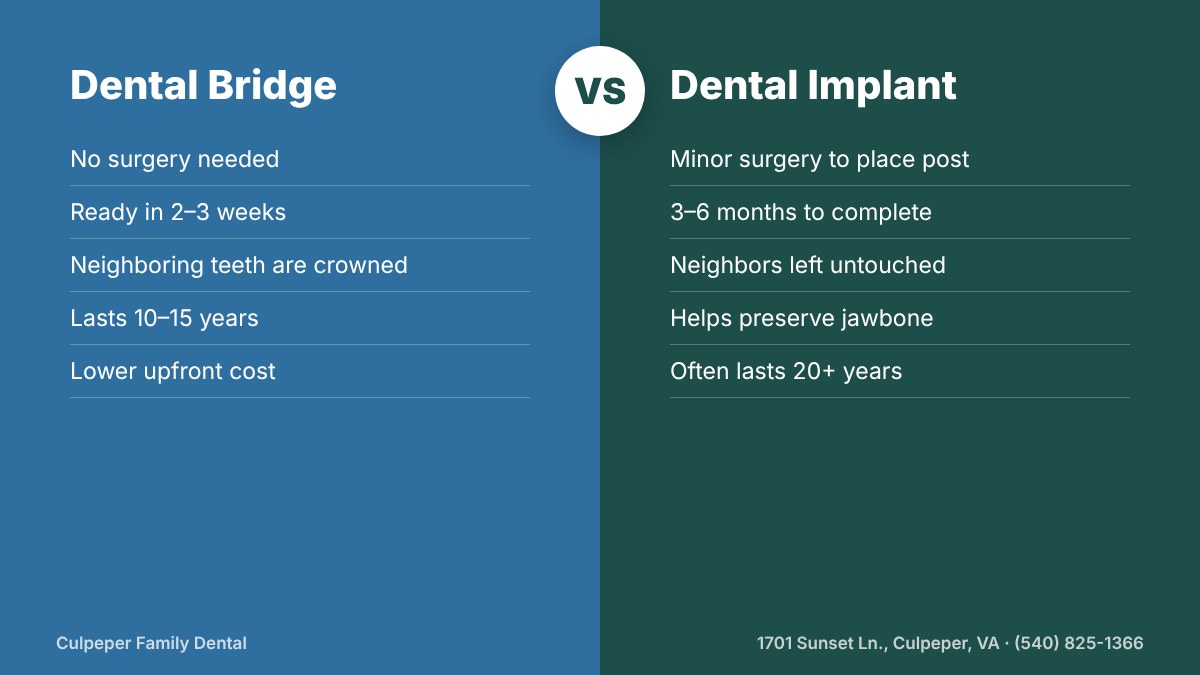
Dental Bridge vs. Dental Implant
| Factor | Traditional Bridge | Single Implant |
|---|---|---|
| Surgery needed | No | Yes |
| Treatment time | 2–3 weeks | 3–6 months |
| Affects neighboring teeth | Yes, they are crowned | No |
| Prevents bone loss | No | Yes |
| Typical lifespan | 10–15 years | Often 20+ years |
| Upfront cost | Usually lower | Usually higher |
Dental bridges in Culpeper are a great choice if the neighboring teeth already need crowns, if you prefer to avoid surgery, or if you want a faster result. If the neighboring teeth are healthy and untouched, an implant may be the more conservative long-term choice. For several missing teeth, compare options in our dentures vs. implant-supported dentures guide.
The Bridge Procedure Step by Step
- Exam and planning: we check the health of the supporting teeth and gums with digital X-rays.
- Preparation: the anchor teeth are numbed and reshaped for crowns.
- Impressions: precise scans are sent to the dental lab, and you wear a temporary bridge.
- Placement: about two to three weeks later, your permanent bridge is fitted, adjusted and cemented.
How Much Do Dental Bridges in Culpeper Cost?
The cost of dental bridges in Culpeper depends on how many teeth are replaced, the material (porcelain, zirconia or porcelain-fused-to-metal), and whether implants are involved. Because bridges restore function, many insurance plans cover part of the cost. We provide a written estimate before treatment and offer flexible plans through our financial options. Learn more in our insurance and payment guide.
How to Care for a Dental Bridge
- Brush twice daily with fluoride toothpaste.
- Clean under the replacement tooth every day with a floss threader, super floss or water flosser.
- Avoid chewing ice, hard candy and other very hard foods.
- Keep up with regular dental cleanings so we can check the anchor teeth and gums.
Healthy gums are essential for long-lasting dental bridges in Culpeper, so watch for bleeding or swelling and read our gum disease guide if you notice symptoms.
Signs Your Bridge Needs Attention
- The bridge feels loose or moves when you chew
- Pain, swelling or bad taste around an anchor tooth
- Food packing under the bridge
- A chip or crack in the porcelain
If you notice any of these, call us. Problems caught early are easier and less costly to fix.
Why Choose Culpeper Family Dental?
Dr. Ibrahim ElGarawany and Dr. Ifrah Malik will review every tooth replacement option with you, including bridges, implants and dentures, so you can make an informed choice for your health and budget. Our office offers restorative, cosmetic and family dentistry in one convenient location. If you have been researching dental bridges in Culpeper, we would be glad to help you choose the right solution.
Frequently Asked Questions
How long do dental bridges in Culpeper last?
With good care, most bridges last 10 to 15 years, and many last longer.
Is getting a bridge painful?
The teeth are numbed during preparation, so most patients feel only pressure. Mild sensitivity for a few days is normal.
Can I eat normally with a bridge?
Yes. After a short adjustment period, most people eat their usual foods. Avoid very hard or sticky items to protect the bridge.
Is a bridge or an implant better?
It depends on your neighboring teeth, bone and budget. Implants protect bone and nearby teeth; bridges are faster and need no surgery.
Does insurance cover dental bridges?
Many dental plans cover part of a bridge because it replaces a missing tooth. We verify your benefits before treatment.
Book Your Visit at Culpeper Family Dental
Ready to take the next step? Our team at Culpeper Family Dental, 1701 Sunset Ln., Culpeper, VA 22701, welcomes patients from Culpeper, Orange, Madison, Warrenton, Rixeyville and Remington. Call (540) 825-1366, text (571) 427-0078, or request an appointment online. Learn more on our dental bridges service page or review our financial options.
This article is for general education and does not replace an exam. Your dentist will recommend the right treatment after evaluating your teeth.
Leave a reply