
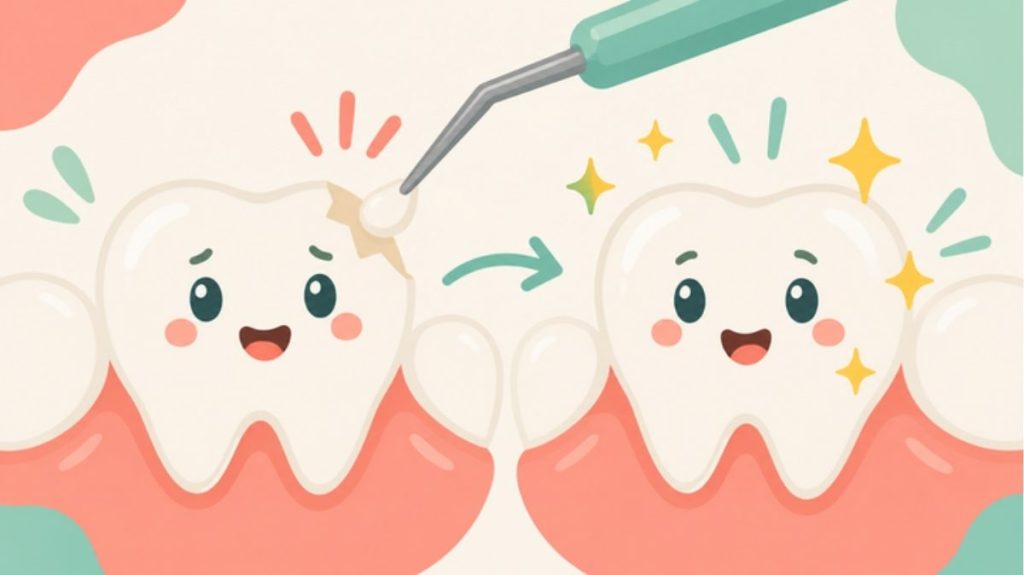
Dental Bonding in Culpeper, VA: A Fast, Affordable Fix for Chips & Gaps
A small chip, a gap between your front teeth, or a stubborn stain can make you self-conscious every time you smile. Dental bonding in Culpeper is one of the quickest and most budget-friendly ways to fix these flaws, often in a single appointment with little or no numbing.
Quick Answer: Dental bonding is a cosmetic treatment where your dentist applies tooth-colored composite resin to a tooth, sculpts it, and hardens it with a special light. It fixes chips, small gaps, stains and uneven edges in about 30–60 minutes per tooth, usually lasts 3–10 years, and costs much less than veneers or crowns.
Table of Contents
What Is Dental Bonding?
Bonding uses the same tooth-colored composite resin we use for composite fillings. The resin is matched to your natural shade, shaped by hand, and cured with a blue LED light so it bonds firmly to your enamel. The Cleveland Clinic describes bonding as a cosmetic procedure that can repair a wide range of minor imperfections (Cleveland Clinic: Dental Bonding).
Because little to no enamel is removed, dental bonding in Culpeper is considered a conservative and usually reversible option.
What Can Dental Bonding Fix?
Patients most often ask about dental bonding in Culpeper to correct:
- Chipped or cracked front teeth
- Small gaps between teeth (diastema)
- Discoloration that whitening can’t remove
- Teeth that look too short or uneven
- Exposed root surfaces caused by gum recession
If you chipped a tooth suddenly and it hurts, read our emergency dentist guide and call us right away.
The Bonding Procedure Step by Step
1. Shade Selection
We use a shade guide to choose a resin color that blends with your surrounding teeth. If you plan to whiten, do it first so we can match your new, brighter shade.
2. Surface Preparation
The tooth surface is lightly roughened and a conditioning liquid is applied so the resin can grip it securely.
3. Sculpting and Curing
The putty-like resin is applied in layers, shaped, and hardened with a curing light after each layer.
4. Polishing
Finally, we trim, shape and polish the tooth so it shines like natural enamel. Most people walk out of their dental bonding in Culpeper appointment and go straight back to work or school.
How Long Does Dental Bonding Last?
Dental bonding in Culpeper generally lasts between 3 and 10 years, depending on where it is placed and your habits. Biting your nails, chewing ice, grinding your teeth or drinking a lot of coffee, tea and red wine can shorten its life. The good news is that bonding is easy to touch up or repair during routine visits.
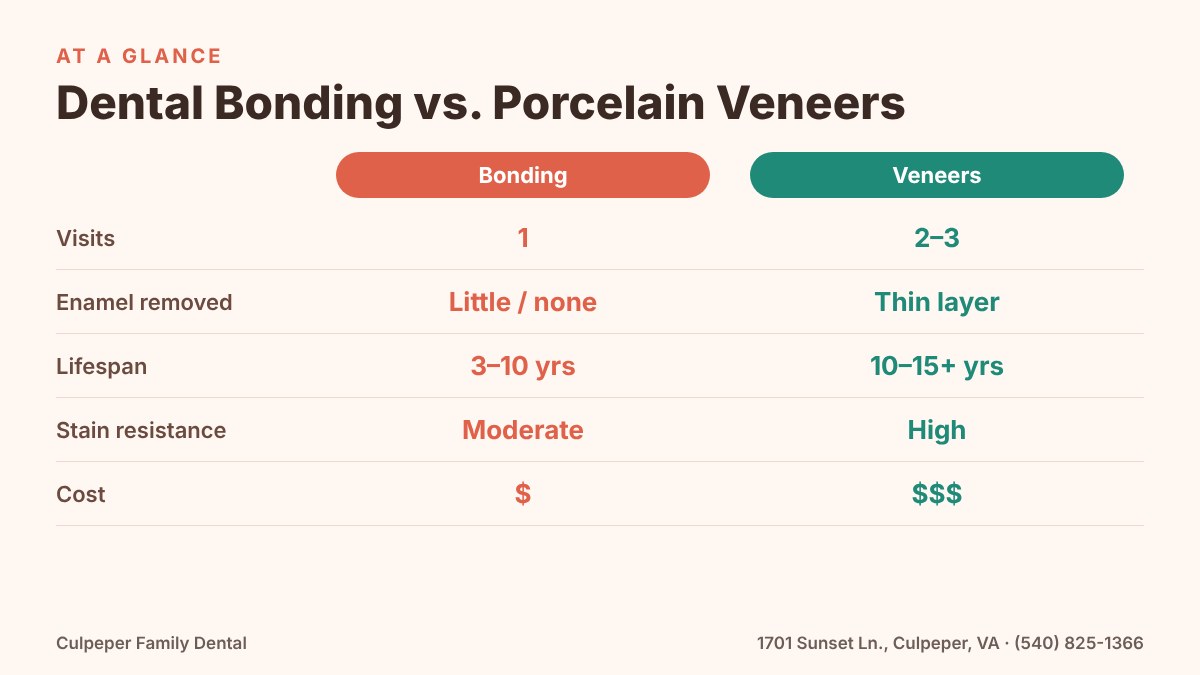
Dental Bonding vs. Veneers: Which Is Right for You?
| Factor | Dental Bonding | Porcelain Veneers |
|---|---|---|
| Visits | Usually 1 | 2–3 |
| Enamel removed | Little or none | Thin layer |
| Lifespan | 3–10 years | 10–15+ years |
| Stain resistance | Moderate | High |
| Cost | Lower | Higher |
| Best for | Small, isolated fixes | Full smile transformation |
If you want to change the color and shape of many teeth at once, explore our guide to veneers in Culpeper. For one chipped tooth or a small gap, dental bonding in Culpeper is often the smarter, more affordable starting point.
How Much Does Dental Bonding Cost?
The cost of dental bonding in Culpeper depends on how many teeth are treated, the size of the repair and whether it is cosmetic or restorative. Bonding is typically one of the most affordable cosmetic treatments we offer. When bonding repairs decay or a broken tooth, insurance may cover part of it. Visit our financial options page or our article on dental insurance and payment options to plan ahead.
Caring for Bonded Teeth
- Brush twice daily and floss once a day.
- Avoid biting pens, ice and fingernails.
- Rinse after coffee, tea or red wine to limit staining.
- Ask about a custom night guard if you grind your teeth.
- Schedule professional cleanings every six months so we can polish and check your bonding.
Is Dental Bonding in Culpeper Right for You?
You are likely a good candidate for dental bonding in Culpeper if your teeth and gums are healthy and the problem is small to moderate. If a tooth has large decay or a big fracture, a dental crown may provide better strength. During your visit, Dr. ElGarawany or Dr. Malik will walk you through every option, including whitening, bonding and veneers, so you can choose with confidence.
Families across Culpeper County choose our office because we offer cosmetic and family care under one roof, with a multilingual team that makes every visit comfortable. If you feel nervous, our tips for managing dental anxiety can help. Many patients say dental bonding in Culpeper was the easiest cosmetic upgrade they have ever made.
Frequently Asked Questions
Does dental bonding in Culpeper hurt?
Usually not. Most bonding treatments do not require numbing unless we are also repairing decay or working near a sensitive nerve.
Can bonding close a gap between my front teeth?
Yes. Small to moderate gaps can often be closed with bonding in a single visit. Larger gaps or crowding may be better treated with clear aligners.
Can I whiten bonded teeth?
Composite resin does not lighten with whitening products. Whiten first, then bond, so the resin matches your brighter shade.
How long does a bonding appointment take?
Most teeth take about 30 to 60 minutes each, so several teeth can often be treated in one visit.
Is bonding covered by insurance?
Insurance often helps when bonding repairs a broken or decayed tooth. Purely cosmetic bonding is usually an out-of-pocket expense.
Book Your Visit at Culpeper Family Dental
Ready to take the next step? Our team at Culpeper Family Dental, 1701 Sunset Ln., Culpeper, VA 22701, welcomes patients from Culpeper, Orange, Madison, Warrenton, Rixeyville and Remington. Call (540) 825-1366, text (571) 427-0078, or request an appointment online. Learn more on our dental bonding service page or review our financial options.
This article is for general education and does not replace an exam. Your dentist will recommend the right treatment after evaluating your teeth.
Leave a reply